Failed Diets (Aren’t).
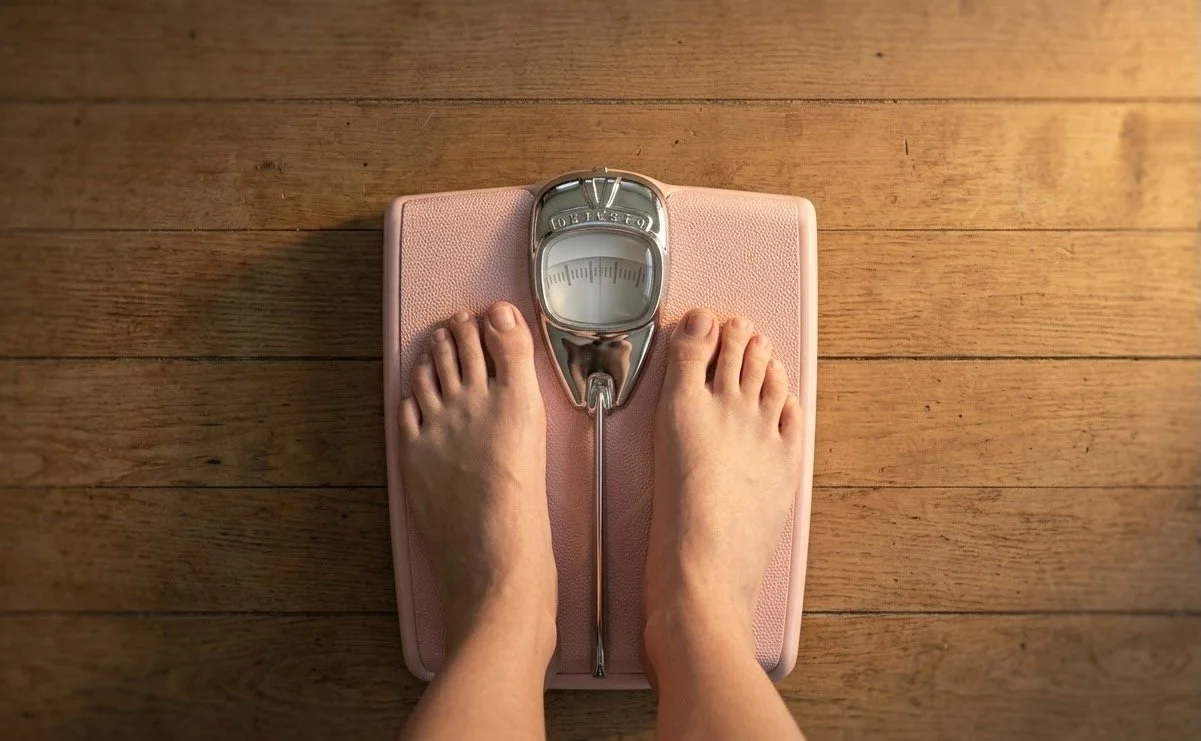
I'm on a diet again.
I've been fortunate with my weight — not "cosmetically thin", but also not clinically overweight (most of the time). Even now, at “that certain age” when one’s weight supposedly balloons no matter what you do, mine’s remained more or less steady for ages with minimal effort.
But gradually it’s crept up, and been past the point I’m comfortable with for quite a while. I’d been avoiding dealing with it because losing weight is a Project and I already have a gigantic Project (launching a business) which is just about at the limit of Projects I’m able to handle.
Then, last month the scale hit that “thou shalt not pass” point, so …here I am.
Before I go any further, I’d like to first point out something everybody seems to know but doesn’t necessarily connect the dots on.
Modern Life is Inherently Obesogenic
“Obesogenic” means that without deliberate countermeasures, you'll probably get fat.
Check out this 1975 staff photo. Now compare that to this one from 2025. Notice the difference in their body size? Notice how it’s not just one or two people, but everyone in each photo? This is not the result of selectivity on my part. I was there in the 70’s and can attest that most people were thin-ish without particularly trying. Obesity was rare.
The increase in the average American's weight since 1960 is staggering. Scientists are still arguing over what (exactly) is causing this phenomenon, but they all agree it exists. And if there were an easy, universal fix that worked for everyone you would have heard about it by now.
Indeed, the first year of my business, I was seeing weight loss programs lauded by my marketing group as a never-ending source of customers because it addressed, quote: an “unsolvable problem”. Meaning a challenge that is incredibly difficult or impossible to solve because of incomplete, contradictory, and changing requirements that are often difficult to recognize.
In other words, those who chose weight loss as their business focus would never run out of customers because the demand for weight loss support is functionally infinite.
Weight management is technically possible, it’s just very difficult, because each person must figure out a solution that works for them. Like any form of self-care, it's an ongoing process, and a skill that has to be mastered in a different way by each person who learns it.
That means a lot of trying. Which inevitably involves a considerable amount of failing.
You cannot succeed without failure.
That might seem counterintuitive, but the price of success is failure. Often, a long series of failures as you figure out what not to do.
Doing something for the first time carries the inherent risk that it’s not going to work. And in many situations, sticking to a tried-and-true method is the best option. But anything that’s subject to change (and both our bodies and their environments are forever changing) is also subject to becoming obsolete. Then your “tried and true" isn't so true anymore.
The solution to this is experimentation. You don’t want to suppress failures because they are indications of faulty assumptions that will cause much larger failures down the road. You really do need to collect a lot of information on what not to do. In Agile, every failure is an opportunity for learning and improvement.
As I often explain to my Scrum teams and ADHD clients: never failing means you aren’t trying hard enough. The only sure way to avoid failure is to avoid trying, especially trying anything new.
Back to the story
Like any 21st-century English-speaking woman, I’ve been on multiple diets. All of them worked, at least while I was on the diet. I was even able to maintain my weight loss most of the time. And —like every other 21st century person— I eventually gained the weight back. As I mentioned in this article, most diets require consistent adherence under ideal conditions that (for most people) simply do not exist.
So many diets: calorie-counting, avoiding fat, avoiding carbs, writing down everything I ate, limiting my intake to only 7 pre-approved items, and (in one memorable instance) a large-scale, multi-team competition called “Game-On*”. That one was a lot of fun, actually.
Every Diet Was an Iteration
But each diet I did was an iteration on weight loss. And — over time — I eventually learned how to lose and maintain my weight. I'm not totally immune to our modern environment's obesogenic effect, but I'm fairly resistant. And when I get into trouble, I know how to get out. I've lost 8 pounds.
What took me longest to understand is that there was never going to be a last diet.
People almost always treat weight loss as a project — something with a start, a finish, and a state called done. But it isn't. It's maintenance. It lives in the same category as laundry, hygiene, and keeping your pipeline full: work that is never finished, only current.
It might sound like failure to say I've been on forty diets. But it doesn't sound like failure to say that this morning was the fortieth time I cleaned my kitchen. Or the four hundredth. Nobody has ever looked at a dirty kitchen and concluded that kitchen-cleaning “doesn't work”.
So if you lost the weight and gained it back, you didn't fail. You ran an iteration. The question was never which diet finally fixes this? There’s no “finally” about self-care or maintenance. Add what you’ve learned to your toolbox (my success is mainly due to a very big toolbox) and go clean the kitchen again.
* a.k.a. “Pee-On” because it required drinking 3 liters of water a day.
